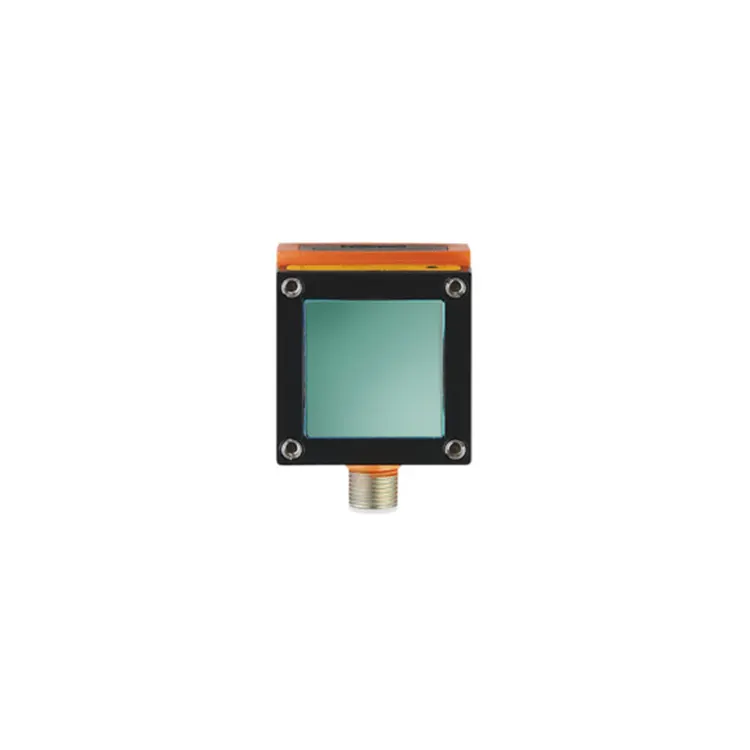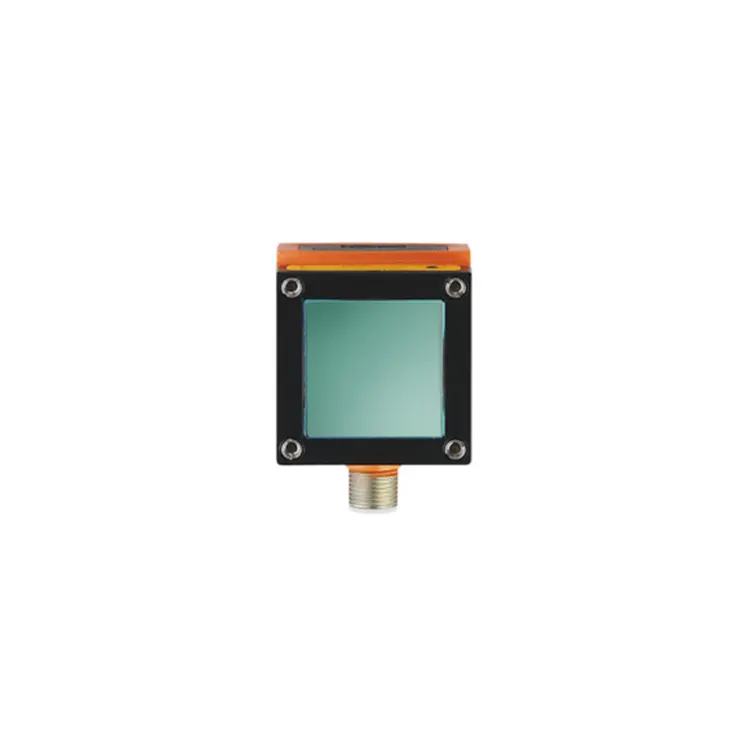

Accurate distance measurement is essential for reliable industrial automation, from conveyor positioning to packaging inspection. Floating Light helps industrial buyers source the IFM OGP101, a laser distance sensor designed for non-contact measurement in demanding production environments. With a 100–1000 mm measuring range, 0.1 mm resolution, and flexible switching and analog outputs, this sensor can support applications that require consistent position feedback and dependable process monitoring.
Article Summary: This guide explains the IFM OGP101's key specifications, working principles, industrial applications, installation considerations, and purchasing factors. It also compares related OGP series models to help engineers, maintenance teams, and automation integrators determine whether this sensor fits their measurement requirements.
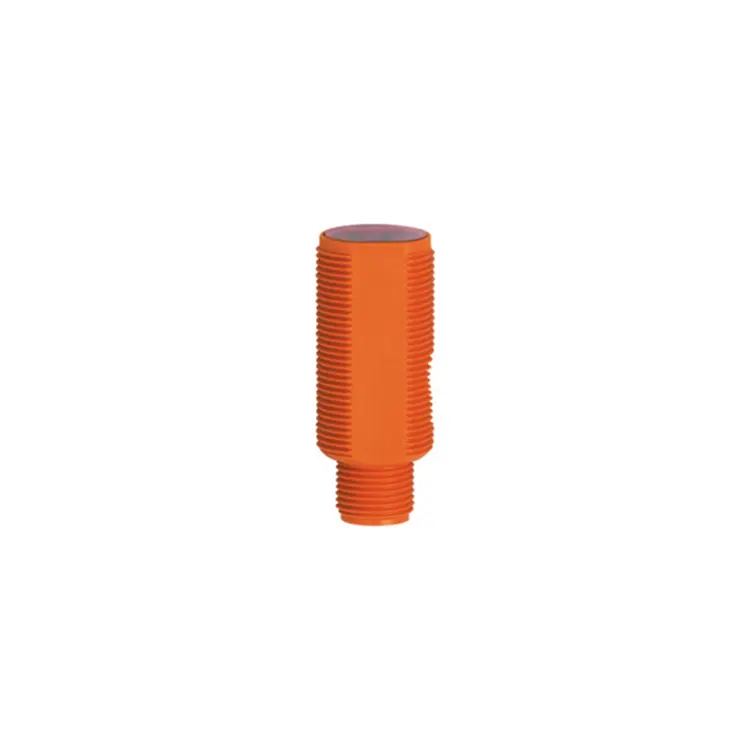
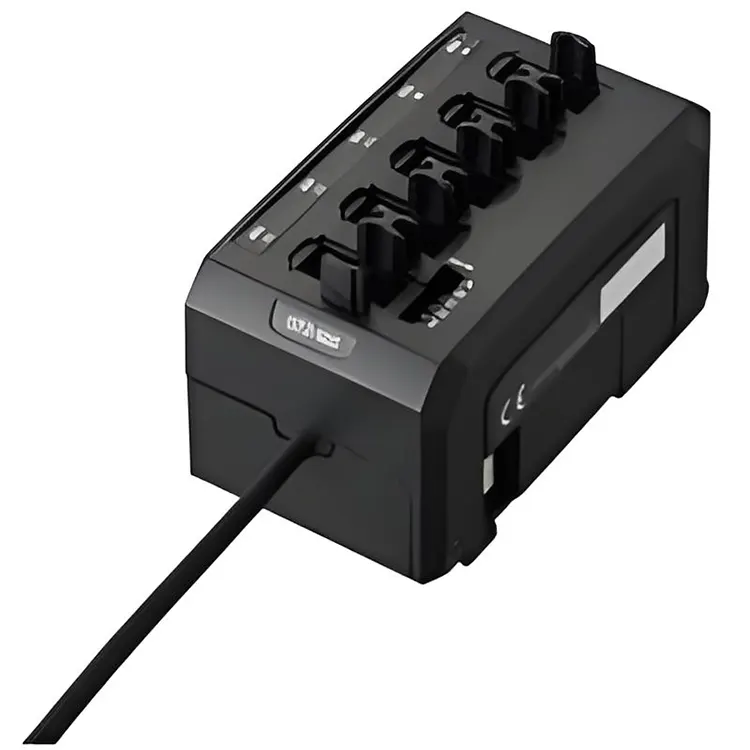
The IFM OGP101 belongs to the OGP series of optical laser distance sensors from IFM. It is designed for non-contact distance and position measurement, allowing automation equipment to obtain measurement information without physically touching a target.
Unlike mechanical limit switches, which respond when a moving component reaches a physical contact point, a distance sensor can monitor the position of a target across a defined measuring range. This approach can reduce contact-related wear and provide more flexible measurement options for automated production systems.
The OGP101 is specified for a measuring range of 100 to 1000 mm. Its listed resolution is 0.1 mm, while repeatability is specified at ≤ ±0.3 mm. These characteristics make it a candidate for applications involving workpiece positioning, product height monitoring, and dimensional process checks.
However, resolution and repeatability should not be confused with absolute measurement accuracy. Actual results depend on the target surface, mounting geometry, ambient conditions, and the sensor's specified operating limits. Engineers should verify performance against the requirements of the intended application.
For more information about the product, visit the IFM OGP101 product page.
Reviewing the technical specifications before purchasing helps engineers determine whether the IFM OGP101 is electrically, mechanically, and functionally compatible with an existing automation system.
| Parameter | Specification | Engineering Significance |
|---|---|---|
| Model | IFM OGP101 | Identifies the required sensor model |
| Measuring range | 100–1000 mm | Defines the listed operating distance range |
| Resolution | 0.1 mm | Indicates the smallest listed measurement increment |
| Repeatability | ≤ ±0.3 mm | Helps assess consistency across repeated measurements |
| Output configuration | 1 PNP switching output + 1 analog output | Supports switching decisions and continuous-value monitoring |
| Analog output options | 4–20 mA / 0–10 V | Provides alternative signal formats for compatible controllers |
| Electrical connection | M12, 4-pin connector | Supports a standardized industrial connection arrangement |
| Operating voltage | 10–30 V DC | Defines the listed supply-voltage range |
| Protection rating | IP67 | Indicates protection against dust ingress and temporary immersion under specified test conditions |
| Operating temperature | -10°C to +60°C | Defines the listed ambient operating range |
| Housing material | Nickel-plated brass | Provides a metal enclosure for industrial installation |
Note: Confirm the current manufacturer datasheet, wiring diagram, and ordering code before installation. The listed specifications are a starting point for model selection, not a substitute for application-specific validation.
Three parameters deserve particular attention:
A laser distance sensor uses emitted light and the sensor's optical measurement system to determine the distance to a target. The resulting information can be used by a programmable logic controller (PLC), machine controller, or other compatible automation equipment.
In a typical installation, the measurement process follows several steps:
The PNP switching output is useful when a control system needs a discrete state, such as a threshold being reached. The analog output can be more appropriate when a controller must evaluate changing distance values across a measurement range.
For example, a packaging line may use a switching threshold to identify a product that exceeds a defined height, while an analog signal can help the control system monitor height variation continuously.
Before implementation, confirm the output scaling, electrical load requirements, signal interpretation, and wiring arrangement in the applicable product documentation.
The IFM OGP101 can be considered for industrial processes where non-contact distance measurement can improve positioning consistency or support automated inspection. Suitability depends on the target material, installation distance, environmental conditions, and required response characteristics.
On conveyor systems, the sensor can help detect workpiece position at a designated measurement point. A controller can use the signal to coordinate transfer mechanisms, sorting equipment, or downstream processing.
Potential benefits include:
Packaging machinery often needs to identify height differences caused by incorrect filling, missing components, or inconsistent product placement. A distance sensor can provide measurement data for comparison against configured limits.
For suitable targets within the measuring range, the OGP101 may be integrated into an inspection station to flag products for further inspection or rejection. Critical quality decisions should be validated using representative products and the actual production speed.
Wood panels, engineered boards, and other sheet materials may require position or dimension checks before cutting or machining. A properly positioned sensor can supply distance information to help verify material placement.
Because wood surfaces vary in color, texture, and reflectivity, testing should cover the full range of materials expected in production. The sensor's nominal resolution alone does not guarantee identical performance on every surface.
Automated material handling equipment may use distance measurements to verify pallet position or estimate cargo height. A sensor can contribute to the control logic for loading, transfer, or positioning tasks when the geometry and measurement range are appropriate.
Applications involving moving vehicles or personnel require a separate safety assessment. A general-purpose distance sensor should not be treated as a certified personnel-protection device unless its specific certification and intended use explicitly support that function.
In automotive production, non-contact sensing can support component positioning and process checks. The OGP101 may be evaluated for fixture verification, part-presence-related distance checks, or dimensional monitoring where its measurement characteristics meet the required tolerances.
Choosing the right sensor involves more than selecting the model with the longest range. Engineers should compare the measuring distance, output configuration, controller compatibility, and actual process requirements.
| Model | Listed Measuring Range | Listed Output Configuration | Potential Selection Focus |
|---|---|---|---|
| IFM OGP100 | 50–500 mm | NPN switching + analog output | Shorter-distance positioning and measurement |
| IFM OGP101 | 100–1000 mm | PNP switching + analog output | General-purpose medium-range sensing |
| IFM OGP102 | 200–2000 mm | PNP switching + analog output | Applications requiring a longer measurement distance |
| IFM OGP200 | 30–300 mm | IO-Link + two switching outputs | Short-range detection where its communication and output features fit the system |
Comparison note: The table summarizes the configurations listed on the Floating Light OGP101 product page. Verify each alternative's current datasheet, exact variant, and availability before making a substitution.
The OGP101 can be a practical choice when the required distance falls within 100–1000 mm and the controller supports its PNP and analog signal configuration. The OGP100 may be worth evaluating for shorter distances, while the OGP102 may better fit applications requiring a longer range.
If an installation requires IO-Link communication, do not assume that every OGP model supports the same interface. Compare the exact model's communication specifications with the requirements of the control architecture.
Correct installation is essential for obtaining useful measurement results. Even a sensor with suitable nominal specifications may perform poorly if the mounting arrangement, target surface, or electrical integration is inappropriate.
The listed operating temperature range is -10°C to +60°C, and the product has an IP67 protection rating. These specifications help define its installation boundaries, but they do not mean the sensor is suitable for every industrial environment.
Consider condensation, chemical exposure, vibration, temperature fluctuations, and the possibility of residue accumulating on the optical surface. IP67 protection should not be interpreted as unrestricted resistance to chemicals, continuous immersion, or high-pressure cleaning.
Before full production, test the sensor with the actual PLC, wiring, target materials, mounting fixtures, and machine sequence. Record normal measurement variation and verify that the configured switching thresholds leave sufficient margin for expected process fluctuations.
When a distance sensor produces inconsistent signals, a structured troubleshooting process can help isolate the cause without unnecessary component replacement.
| Observed Issue | Possible Cause | Recommended Check |
|---|---|---|
| No output signal | Incorrect supply voltage or wiring | Verify power, connector pinout, and PLC input configuration. |
| Unstable distance readings | Variable surface reflectivity, vibration, or optical interference | Inspect the target, stabilize mounting, and test under normal operating conditions. |
| Incorrect switching point | Wrong threshold or signal interpretation | Review the controller logic and the sensor's supported configuration. |
| Analog values appear incorrect | Signal type or scaling mismatch | Check current-versus-voltage configuration and PLC scaling. |
| Intermittent operation | Loose connector, damaged cable, or electrical interference | Inspect connections, cable condition, and power quality. |
The OGP101 product information lists built-in short-circuit and overload protection. Nevertheless, repeated protection events should be investigated rather than treated as normal operating conditions. Check the wiring and connected load, and follow the manufacturer's recovery and safety instructions.
Routine maintenance should include visual inspection, cleaning the optical surface using an approved method, checking mounting stability, and periodically verifying readings against a known reference where appropriate.
For OEMs, system integrators, and maintenance teams, procurement decisions should account for both technical suitability and long-term supply requirements.
Before ordering an IFM OGP101, consider the following checklist:
Floating Light Automation lists the IFM OGP101 for industrial buyers and describes supply support, technical consultation, and procurement options for single units and bulk orders. Buyers should confirm current stock, lead times, warranty conditions, and any sample arrangements directly before making purchasing commitments.
For related automation components, explore the Floating Light Automation website and its industrial automation product range.
The listed measuring range is 100–1000 mm. Confirm that the normal target distance and expected mechanical movement remain within the supported operating range for your application.
The product page lists a resolution of 0.1 mm and repeatability of ≤ ±0.3 mm. Resolution describes the measurement increment, while repeatability describes consistency across repeated measurements. Neither value should automatically be interpreted as absolute measurement accuracy.
The listed configuration includes one PNP switching output and one analog output, with 4–20 mA and 0–10 V options. Confirm the selected configuration and wiring requirements before connecting it to a PLC or other controller.
Its listed IP67 rating provides dust protection and protection against temporary immersion under specified test conditions. Suitability for a particular outdoor installation depends on temperature, condensation, UV exposure, chemicals, mounting, and other environmental factors. Check the manufacturer's installation requirements.
Performance depends on the optical properties, geometry, and position of the target. Transparent, mirror-like, or highly reflective surfaces can affect optical measurement. Test the actual material under representative conditions before using the sensor for critical inspection.
The product page describes the sensor as having factory settings intended to simplify installation. However, users should still verify the power supply, output wiring, PLC logic, measurement position, and application performance. Whether further configuration is required depends on the control system and process.
Compare the required distance, output type, target characteristics, and controller compatibility. The listed ranges are 50–500 mm for the OGP100, 100–1000 mm for the OGP101, and 200–2000 mm for the OGP102. Always verify the latest documentation for the exact model.
Floating Light Automation lists the IFM OGP101 on its website. Contact the supplier to confirm availability, pricing, delivery estimates, documentation, and warranty conditions for your order quantity.
The IFM OGP101 is a laser distance sensor worth evaluating for non-contact positioning, packaging inspection, material handling, and other industrial automation tasks. Its listed 100–1000 mm measuring range, 0.1 mm resolution, PNP switching output, and analog signal options provide a useful starting point for engineering selection. Successful integration still depends on target characteristics, electrical compatibility, installation quality, and application-specific testing.
Whether you are replacing an existing sensor, developing a new production line, or sourcing components for an OEM project, Floating Light can help you check model compatibility and discuss procurement requirements. Contact us today to request an IFM OGP101 quotation, confirm current availability, and receive product selection support for your industrial automation project.
-