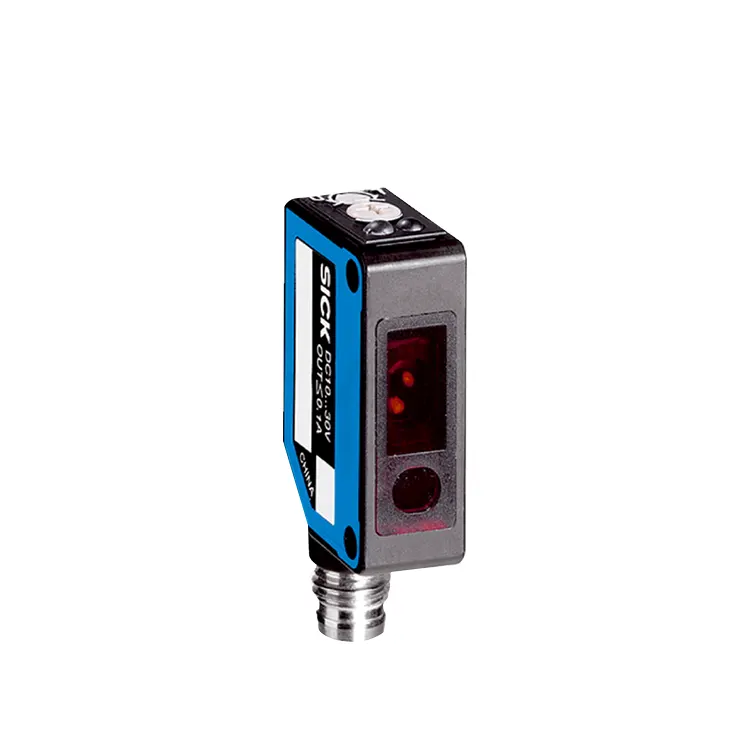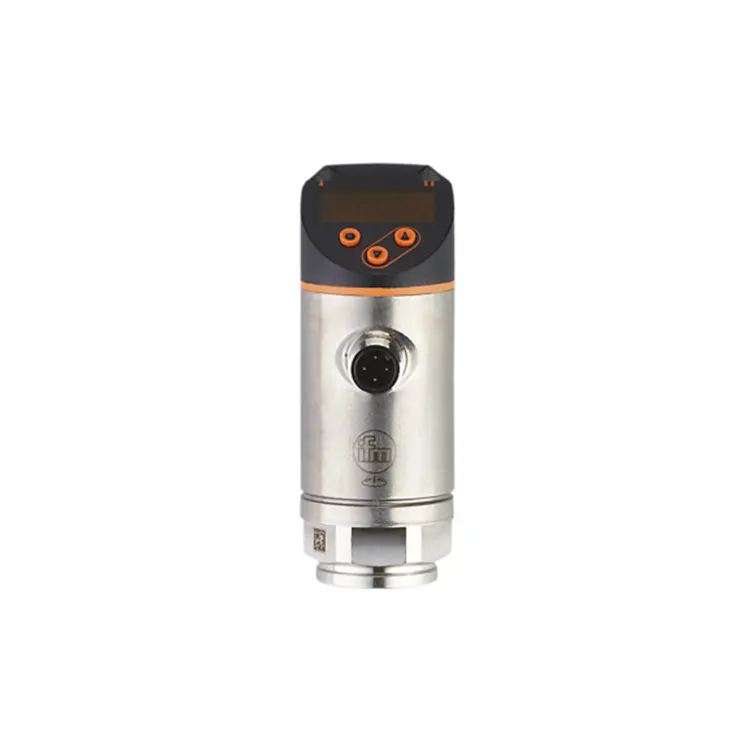

Floating Light provides industrial automation components and sourcing support for manufacturers seeking dependable sensing solutions. The IFM O6H202 diffuse reflection sensor with background suppression is designed to detect objects reliably in compact installations, helping production teams improve object recognition, streamline conveyor operations, and support consistent automated processes.
The IFM O6H202 is a compact photoelectric sensor designed for industrial object detection where background suppression, flexible adjustment, and dependable switching performance matter. Featuring visible red light, a PNP switching output, a selectable light-on/dark-on function, and an adjustable sensing range of 2–200 mm, it can support applications such as conveyor monitoring, product positioning, and automated material handling. Its IP65/IP67 protection ratings and compact rectangular housing make it suitable for many factory environments. This guide examines its technical specifications, operating principles, application scenarios, installation considerations, and purchasing factors to help engineers and equipment buyers evaluate whether it meets their automation requirements.
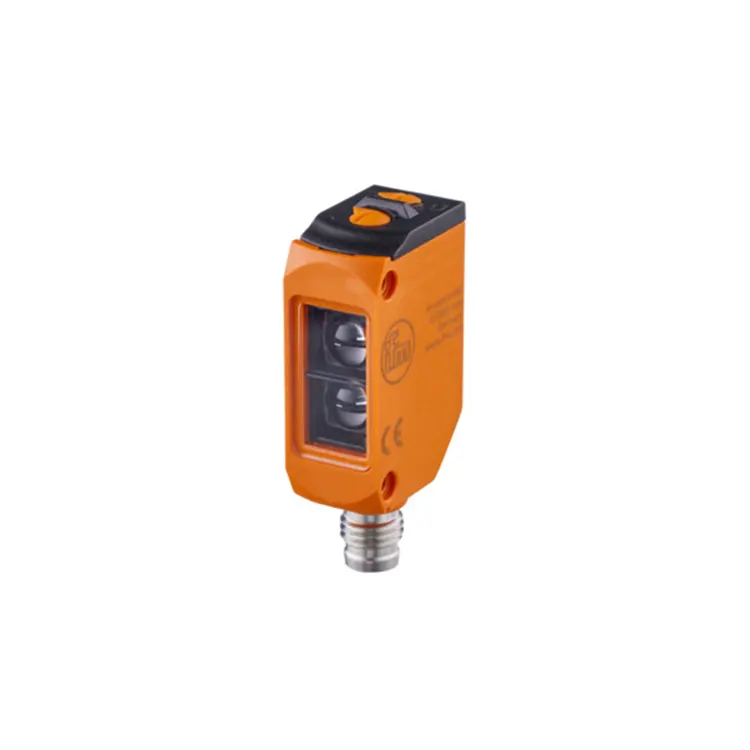
The IFM O6H202 is a diffuse reflection photoelectric sensor with background suppression from ifm electronic. It is intended for industrial applications that require non-contact detection of objects within a defined sensing range.
Unlike mechanical switches, which require physical contact with a target, a photoelectric sensor detects an object using light. This non-contact operating principle can reduce mechanical wear and support high-frequency detection in automated production environments.
The O6H202 uses visible red light with a wavelength of 633 nm. Its adjustable detection range extends from 2 to 200 mm under specified reference conditions. The background suppression function helps distinguish the target object from a background surface, an important consideration when products move along conveyor belts or pass in front of machine structures.
Its rectangular housing measures approximately 46 × 13 × 21 mm, making it useful for installations where available mounting space is limited. The model also features a potentiometer for sensitivity adjustment and a rotary switch for selecting light-on or dark-on operation.
For automation engineers, maintenance teams, and industrial equipment buyers, the main evaluation points are detection distance, target characteristics, electrical compatibility, mounting clearance, and environmental protection.
Diffuse reflection sensors emit light toward a target and detect some of the light reflected back. However, a conventional diffuse sensor may respond to objects or surfaces behind the intended target, depending on their reflectivity and position.
Background suppression is designed to reduce this unwanted response by helping the sensor distinguish the target from objects located farther behind it. This makes the technology useful when the background is reflective or when a fixed machine surface is close to the detection zone.
The IFM O6H202 combines diffuse reflection sensing with an adjustable detection range. Its performance depends on the target's reflectivity, distance, alignment, and surrounding geometry.
Background suppression does not eliminate every possible detection error. Highly reflective targets, very dark materials, changing distances, and poor alignment can still affect performance. Actual operating conditions should therefore be tested before the sensor is integrated into a production line.
Reviewing the electrical, optical, and mechanical specifications helps determine whether the IFM O6H202 is suitable for a particular machine or production process.
| Specification | Technical Detail | Practical Significance |
|---|---|---|
| Product type | Diffuse reflection sensor with background suppression | Supports non-contact object detection |
| Model | O6H202 | Identifies the specific sensor variant |
| Light source | Visible red light | Helps with setup and alignment |
| Light wavelength | 633 nm | Defines the emitted optical wavelength |
| Detection range | 2–200 mm | Supports short-range industrial sensing |
| Supply voltage | 10–30 V DC | Compatible with suitable industrial DC supplies |
| Electrical output | PNP | Must match the input circuit and PLC configuration |
| Output function | Selectable light-on/dark-on | Allows application-specific switching behavior |
| Maximum switching frequency | 1,000 Hz | Supports applications requiring frequent switching |
| Continuous output current rating | 100 mA | Helps determine electrical load compatibility |
| Protection rating | IP65 and IP67 | Provides protection against dust and specified water exposure conditions |
| Operating temperature | -25°C to +60°C | Defines the stated ambient operating range |
| Dimensions | 46 × 13 × 21 mm | Useful for checking mounting clearance |
| Electrical connection | 3-contact M8 connector | Requires a compatible mating connector and cable |
| Housing material | ABS and PPSU components | Relevant to mechanical and environmental suitability |
Note: Specifications are based on published product information. Confirm the current manufacturer's datasheet, wiring diagram, and ordering details before purchase or installation.
For complete technical information, consult the official IFM O6H202 product page and its available datasheet.
Industrial equipment frequently places sensors close to guides, brackets, pneumatic components, and moving products. The O6H202's compact rectangular housing helps engineers consider sensing points that may not accommodate larger devices. Before installation, verify the cable bend radius, connector clearance, mounting-hole position, and access needed for adjustment.
The integrated potentiometer allows sensitivity adjustment, helping technicians adapt the sensor to the target and installation conditions. Correct adjustment is particularly important when detecting objects with different colors or reflectivity levels. A suitable setting should be established through testing rather than assumed from the nominal sensing distance alone.
The rotary switch allows the output function to be configured for light-on or dark-on operation. This flexibility can simplify integration with different control sequences. However, the precise output behavior should be verified against the manufacturer's instructions and the PLC program before the production line starts.
The IP65/IP67 ratings indicate defined levels of protection against dust and water ingress under specified test conditions. They do not mean the sensor is suitable for every cleaning method, chemical exposure, or continuous immersion scenario. Connector sealing and correct installation are essential to maintaining the intended protection.
With a specified switching frequency of up to 1,000 Hz, the sensor can be considered for applications that require frequent detection events. Actual achievable performance depends on target size, spacing, speed, alignment, and the response requirements of the complete control system.
The IFM O6H202 can be evaluated for a range of factory automation tasks. Its suitability depends on the target material, required sensing distance, machine layout, and electrical interface.
Consider a packaging line that transports cartons past a photoelectric sensor. The control system needs a reliable signal to count each carton and coordinate a downstream operation. An O6H202 may be installed beside the conveyor and configured to detect the carton at a defined position.
During commissioning, the technician should test the sensor with the actual cartons, verify that the background does not trigger unwanted switching, and confirm the output signal at the PLC input. If cartons vary significantly in color, surface finish, or dimensions, each relevant product type should be included in the test procedure.
This example illustrates a potential application rather than a guaranteed result. Detection reliability must be established under the actual operating conditions.
Proper installation is essential for obtaining stable switching behavior and avoiding unnecessary production interruptions. The following checklist provides a practical starting point.
Allow for the sensor's maximum specified output current of 100 mA and verify the electrical requirements of the connected load. Do not assume that the sensor output can directly drive every actuator or high-current device; an appropriate interface may be required.
For maintenance, periodically inspect the sensing face, mounting position, connector, and cable. Dust, residue, vibration, or accidental displacement may change detection performance. Always follow the applicable machine isolation and electrical safety procedures before servicing the installation.
Although the IFM O6H202 offers useful features for compact industrial sensing, it should be compared with the requirements of the application rather than selected by model number alone.
| Selection Factor | What to Check | Why It Matters |
|---|---|---|
| Detection distance | Actual target-to-sensor distance | Must fall within the usable detection range |
| Target properties | Color, size, reflectivity, and surface finish | These characteristics can influence optical detection |
| Background conditions | Distance and reflectivity of nearby surfaces | Helps determine whether background suppression is appropriate |
| Electrical interface | Supply voltage, PNP input compatibility, and load current | Prevents wiring and control-system mismatches |
| Operating environment | Temperature, dust, moisture, and cleaning procedures | Ensures the sensor's protection ratings match the installation |
| Mechanical installation | Mounting space, connector clearance, and vibration | Supports secure installation and convenient maintenance |
| Response requirements | Target speed and switching frequency | Helps confirm that detection timing meets process needs |
Buyers should also verify the exact model suffix, connector arrangement, datasheet revision, stock status, lead time, and warranty terms. If the sensor is intended to replace an existing unit, compare the wiring, sensing characteristics, dimensions, and control logic before installation.
Floating Light can help buyers review product information and sourcing requirements. For detailed electrical and optical specifications, the manufacturer's documentation should remain the primary reference.
The IFM O6H202 is a diffuse reflection photoelectric sensor with background suppression. It detects objects using reflected light and is designed for industrial automation applications.
Its specified detection range is 2–200 mm under the stated reference conditions. The effective range can vary with target reflectivity. Published reference values include 2–200 mm for a white object, 4–200 mm for a grey object, and 8–200 mm for a black object.
Yes. The sensor uses a PNP switching output. Confirm that the connected PLC input or control circuit is compatible with PNP signaling before installation.
It has IP65 and IP67 protection ratings under specified test conditions. Actual suitability depends on installation quality, connector sealing, cleaning procedures, and exposure conditions. These ratings should not be interpreted as universal protection against all liquids or chemicals.
Light-on and dark-on modes provide alternative output switching behavior. The appropriate setting depends on how the sensor's detection state should correspond to the connected control system. Refer to the manufacturer's operating instructions and verify the selected mode during commissioning.
Buyers should confirm the exact model, detection range, target characteristics, supply voltage, PNP output compatibility, connector type, environmental requirements, availability, and delivery terms. Reviewing the current datasheet helps reduce selection errors.
The IFM O6H202 is a compact photoelectric sensor worth considering for industrial applications that need adjustable object detection, background suppression, and a PNP switching interface. Its 2–200 mm specified detection range, selectable light-on/dark-on function, 1,000 Hz switching frequency, and IP65/IP67 protection ratings provide useful reference points when evaluating its suitability for conveyor systems, packaging machinery, and automated assembly processes.
The best results come from matching the sensor to the target material, sensing distance, background conditions, electrical interface, and operating environment. Before placing an order, review the manufacturer's latest documentation and validate the installation against real production conditions.
Looking for reliable industrial automation components or assistance with product sourcing? Floating Light can help you review your requirements, check model compatibility, and identify suitable purchasing options. Visit our IFM O6H202 product page or contact us to discuss your application, availability requirements, and sourcing needs.
-