
Modern manufacturing depends on accurate information. From detecting products on conveyors to monitoring machine position and controlling automated processes, industrial sensors provide the data that allows equipment to respond at the right moment. A SICK Industrial Sensor can support a wide range of industrial sensing requirements, including object detection, measurement, positioning, identification, motion control, and machine safety.
For manufacturers, machine builders, system integrators, and maintenance teams, the real challenge is not simply finding a sensor. The challenge is selecting a sensing solution that matches the target material, operating distance, environment, response time, communication system, and required accuracy. This guide explains the practical considerations behind SICK Industrial Sensor applications and how buyers can avoid common selection and integration problems.
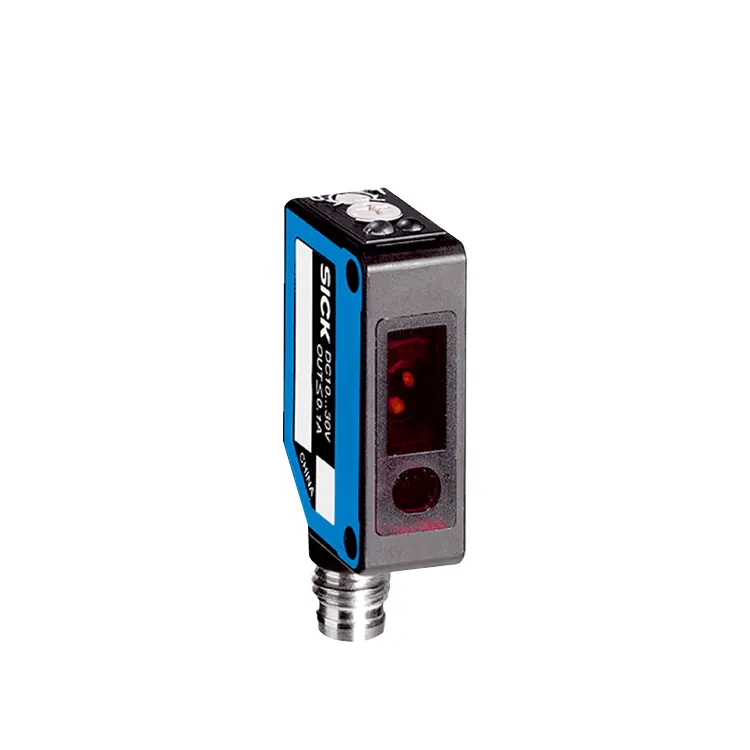
SICK offers a broad portfolio of sensing technologies for factory, logistics, and process automation. Photoelectric, proximity, distance, vision, identification, safety, motion-control, and other sensor technologies can address different industrial tasks. Choosing the right sensor requires an application-first approach that considers detection targets, installation conditions, accuracy, communication, maintenance, and total operating requirements.
Industrial automation relies on dependable information. A conveyor system needs to know whether an object is present. A packaging machine may need to confirm product position. A robotic cell may need accurate position feedback. A production line may need to distinguish different objects or detect a process condition.
This is where industrial sensing becomes a critical part of the automation architecture. SICK describes sensor-based automation around tasks such as measuring, detecting, checking, monitoring, protecting, identifying, and positioning. Its portfolio covers numerous sensing technologies designed for industrial applications.
For equipment operators, sensor reliability has a direct connection with productivity. A false detection can interrupt a production sequence, while a missed detection can result in defective products, machine faults, or material handling problems. The correct sensing technology therefore needs to provide dependable signals under actual operating conditions rather than only in a laboratory environment.
A well-selected SICK Industrial Sensor can also contribute to easier troubleshooting when its diagnostic and communication capabilities are properly integrated into the control architecture.
Different production tasks require different sensing principles. A single technology cannot efficiently solve every detection or measurement challenge. SICK's industrial portfolio includes photoelectric sensors, proximity sensors, identification solutions, distance sensors, automation light grids, vision solutions, safety devices, encoders, and other technologies.
The important point is that sensor selection should begin with the application rather than with the product name. A buyer should first define what must be detected or measured and then determine which sensing principle provides the most reliable result.
Industrial sensing requirements appear throughout manufacturing and material handling. SICK documentation identifies applications across areas such as automotive, electronics, packaging, food and beverage, machine tools, logistics, metal and steel, mining, semiconductor production, plastics, storage, conveyors, textiles, and other industrial sectors.
Object presence, counting, positioning, sorting, and package detection.
Product detection, registration, position verification, and process monitoring.
Position monitoring, component detection, and motion feedback.
Identification, object detection, dimension measurement, and material flow management.
In logistics environments, sensors may need to operate continuously on conveyors and automated handling equipment. In manufacturing, they may face vibration, dust, changing illumination, oil, moisture, or rapidly moving products. The application environment therefore becomes as important as the sensing distance itself.
Choosing an industrial sensor only by price or physical size can create problems later. A better approach is to build a clear application specification before purchasing.
This application-first process helps prevent a common industrial purchasing problem: selecting a technically capable sensor that is nevertheless poorly matched to the actual production environment.
A sensor may perform well during commissioning but become unreliable after months of production if environmental conditions were underestimated.
For example, reflective objects can challenge optical detection. Dust can accumulate around sensing surfaces. Moisture may affect equipment exposed to washdown conditions. Strong ambient light may influence certain optical applications. Mechanical vibration can also change alignment over time.
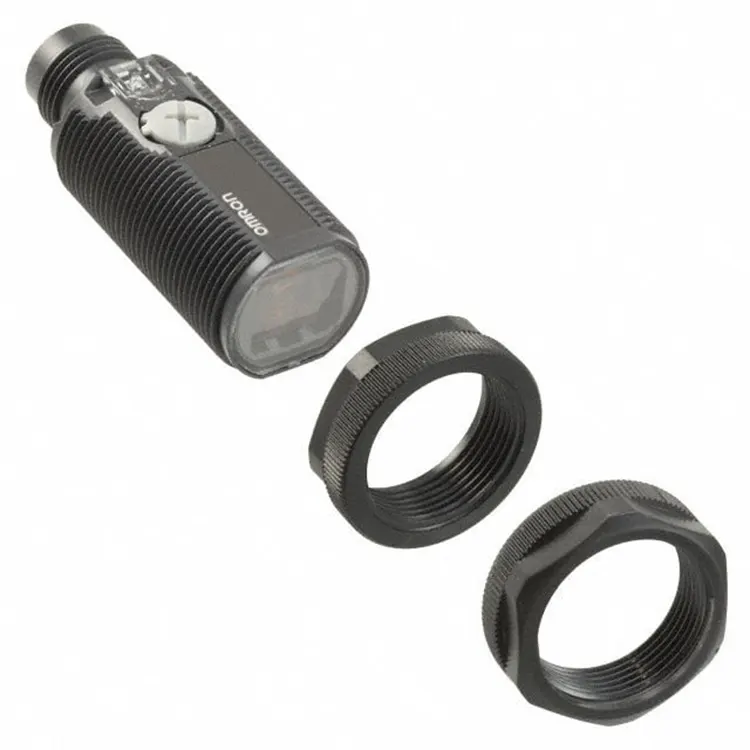
Some SICK photoelectric sensor families are specifically designed for demanding detection conditions, with features intended to improve resistance to ambient light, background reflections, and difficult target characteristics.
| Environmental Factor | Potential Problem | Selection Consideration |
|---|---|---|
| Dust | Signal degradation or contamination | Housing and sensing principle |
| Moisture | Ingress and corrosion risk | Suitable protection rating |
| Vibration | Misalignment or mechanical stress | Mounting and mechanical robustness |
| Ambient Light | Optical interference | Optical technology and application suitability |
| Temperature | Performance changes or component stress | Specified operating temperature |
Modern industrial sensors increasingly do more than provide a simple ON/OFF signal. Depending on the product and application, sensor information can be integrated with PLCs, HMIs, industrial networks, engineering tools, and higher-level systems.
SICK documentation describes integration technologies including IO-Link, EtherNet/IP, EtherCAT, PROFINET, PROFIBUS, CANopen, MODBUS TCP, SSI, and other interfaces across its sensor and control portfolio.
For engineering teams, this can make diagnostic information more accessible and simplify parameter management. For maintenance teams, additional device information can help identify potential problems without requiring every sensor to be physically inspected.
When planning integration, however, compatibility should be verified at the individual product level. Not every SICK Industrial Sensor supports every communication protocol, output configuration, or diagnostic function. Product documentation and application specifications should therefore be checked before final system design.
Even a high-quality sensor cannot compensate for poor installation or neglected maintenance. A practical maintenance program should include several basic checks:
Some SICK sensor products provide features intended to simplify configuration, device replacement, and access to diagnostic information. These capabilities can become particularly valuable when a production line contains many sensors or operates continuously.
Several purchasing and engineering mistakes repeatedly cause sensing problems.
1. Selecting by sensing distance alone
Distance is important, but target material, geometry, reflectivity, environmental conditions, and installation can be equally important.
2. Ignoring the target's physical characteristics
A glossy metal surface, transparent container, dark rubber component, and irregular plastic part may require very different sensing approaches.
3. Forgetting the control-system interface
A sensor that cannot communicate properly with the existing PLC or I/O architecture may require additional hardware or redesign.
4. Treating maintenance as an afterthought
Accessibility, configuration, diagnostics, and replacement procedures should be considered before installation.
5. Choosing the lowest initial cost
A cheaper sensor may become more expensive if it causes false stops, frequent replacement, difficult troubleshooting, or production defects.
| Application Need | Potential Technology | Key Questions |
|---|---|---|
| Object presence | Photoelectric / proximity | What material must be detected? |
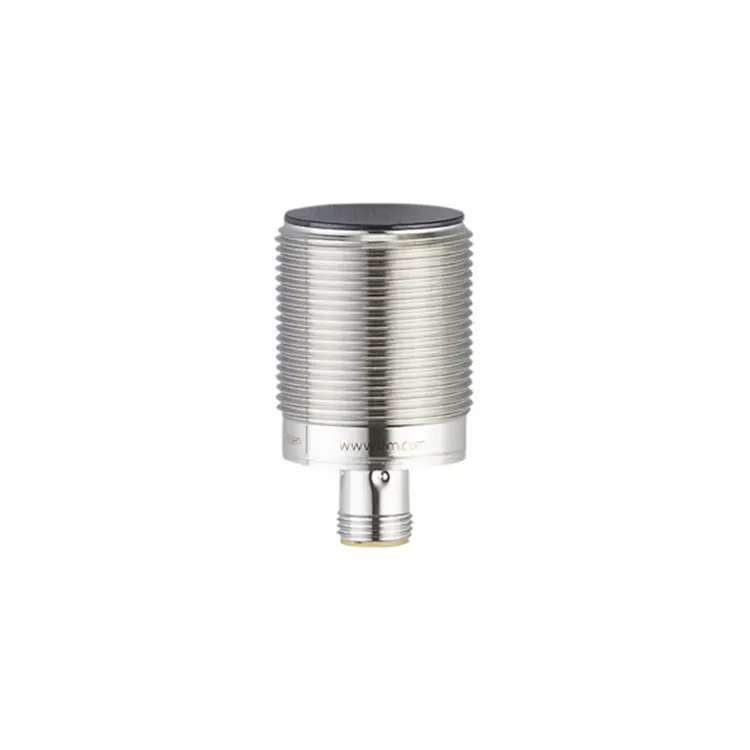
| Metal detection | Inductive proximity | What are the target size and distance? |
| Distance measurement | Distance sensing | What accuracy and measuring range are required? |
| Motion feedback | Encoder | Is position, speed, angle, or synchronization required? |
| Object identification | Identification / vision | Does the system need codes, images, or object characteristics? |
| Machine protection | Safety sensing | What safety function and risk level must be addressed? |
This table provides a starting point rather than a substitute for product-level engineering. Exact model selection should always be based on the application requirements and current technical documentation.
Industrial automation is moving from simple signal collection toward connected, data-driven equipment. Modern sensor architectures can provide information that supports diagnostics, process analysis, condition monitoring, quality control, and machine optimization.
SICK has described intelligent sensors as devices capable of collecting data, evaluating information, and communicating within an industrial network. Its sensor integration technologies also support combining information from multiple devices and making processed data available to automation and higher-level systems.
For manufacturers, the practical benefit is not simply having more data. The real value comes from turning useful sensor information into better decisions: identifying abnormal conditions earlier, reducing unnecessary downtime, improving process consistency, and making machine performance easier to understand.
This is particularly relevant as factories adopt connected production equipment. A carefully designed sensing architecture can provide a foundation for more transparent and responsive automation without requiring every process to be redesigned at once.
A SICK Industrial Sensor is a sensing device designed for industrial automation applications. Depending on the product family, it may detect objects, measure distance, monitor position, identify products, provide motion feedback, or support machine safety.
SICK sensing technologies are used across factory automation, logistics, process automation, packaging, automotive, electronics, machine tools, food and beverage, material handling, and many other industrial applications.
Yes. Sensor technologies such as photoelectric sensors, identification systems, distance sensors, and encoders can address different conveyor requirements, including object detection, positioning, counting, identification, and motion monitoring.
Start with the application. Define the target material, sensing distance, target speed, required accuracy, environmental conditions, mounting space, electrical interface, communication requirements, and maintenance expectations. Then compare suitable product families and models.
Many SICK products support industrial interfaces or communication technologies, but capabilities vary by model. The exact sensor datasheet should be checked to confirm compatibility with the PLC, I/O system, and required network.
Dust, moisture, vibration, ambient light, temperature, target reflectivity, and other conditions can affect detection reliability. A sensor should therefore be evaluated under the actual operating conditions rather than only according to its nominal sensing range.
Reliable sensing is a fundamental part of productive automation. Whether the requirement involves object detection, position monitoring, motion feedback, identification, distance measurement, or machine protection, the right sensor should be selected according to the complete application rather than one specification in isolation.
Floating Light Automation Trade Co.,Ltd. can help industrial buyers and automation teams evaluate sensing requirements and identify suitable solutions for different equipment and production environments. By considering application conditions, integration requirements, reliability, and long-term maintenance together, businesses can build a more dependable automation system.
Discuss your application, target material, sensing distance, machine environment, and automation requirements with the Floating Light Automation Trade Co.,Ltd. team. For product information, application support, and sourcing assistance, contact us to discuss your industrial sensing needs.
-