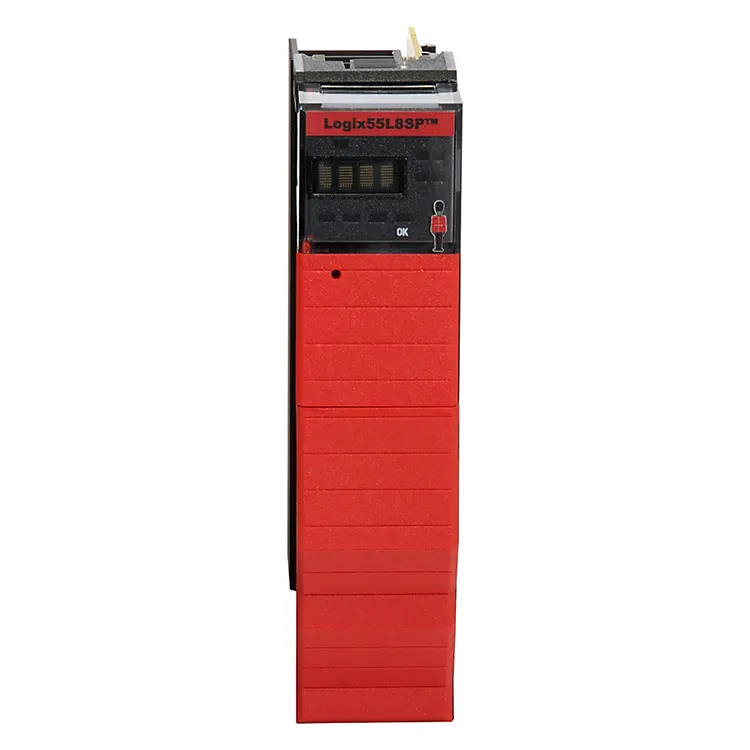

The Allen-Bradley 1756-L8SP is a Safety Partner Controller designed for the GuardLogix 5580 safety-control architecture. Installed in a ControlLogix chassis alongside a compatible GuardLogix 5580 primary controller, it helps provide the processing architecture required for high-integrity industrial safety applications. This guide explains its function, architecture, specifications, installation considerations, configuration workflow, troubleshooting points, and purchasing considerations for engineers, maintenance teams, system integrators, and industrial automation buyers.
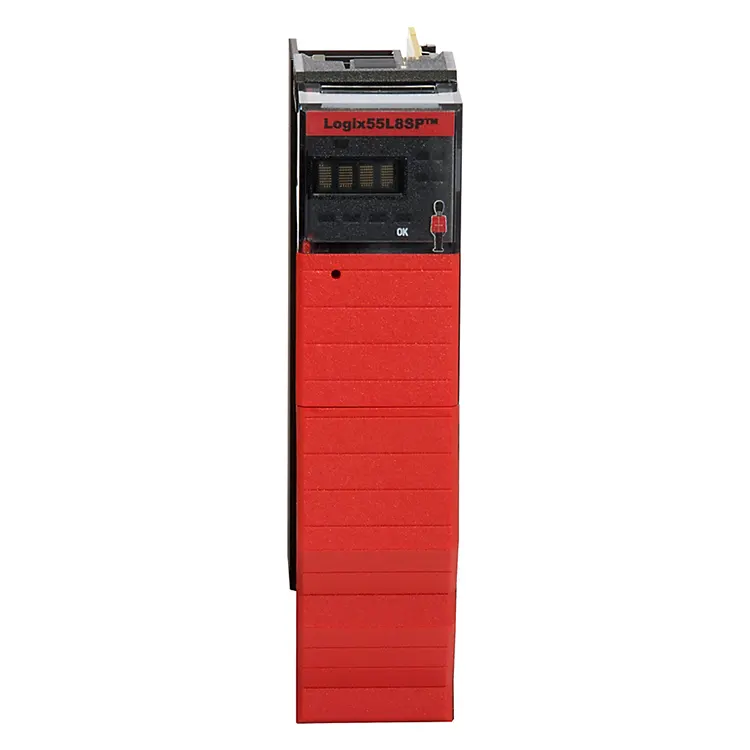
Industrial automation systems increasingly need to perform two jobs at the same time: maintain efficient machine operation and execute safety functions reliably. In a GuardLogix 5580 architecture, the Allen-Bradley 1756-L8SP serves as the Safety Partner Controller associated with a compatible primary GuardLogix controller.
Rockwell Automation documentation identifies the 1756-L8SP as part of the GuardLogix 5580 safety-controller family. The device is not simply a conventional standalone PLC processor. Instead, it participates in the safety architecture of the system and works with a compatible primary controller. :contentReference[oaicite:0]{index=0}
This distinction is important when selecting replacement equipment. A common purchasing mistake is to treat the 1756-L8SP as an independent general-purpose ControlLogix processor. Its intended function is specifically connected to the GuardLogix safety architecture, so compatibility with the primary controller, chassis, firmware, project configuration, and applicable safety requirements must be considered together.
The primary purpose of the 1756-L8SP is to participate in the redundant processing architecture used by GuardLogix 5580 safety controllers. Rockwell Automation lists the 1756-L8SP among the GuardLogix 5580 safety controllers and identifies the device by product code 176 in its Studio 5000 controller information. :contentReference[oaicite:1]{index=1}
For an industrial system designer, the practical advantage is architectural: safety-related control can be integrated into a ControlLogix-based automation environment rather than requiring an entirely separate control platform for every safety function.
Depending on the complete system design, this architecture can support applications involving machine guarding, emergency-stop functions, safety interlocking, safe motion, process protection, and other safety-related control tasks. The actual safety capability depends on the complete certified configuration, including the controller combination, firmware, safety I/O, application design, and applicable standards.
One of the most important considerations is understanding that the 1756-L8SP does not replace the primary GuardLogix controller. It is designed to work with a compatible GuardLogix 5580 safety controller.
Compatible primary controller families include models such as the 1756-L81ES, 1756-L82ES, 1756-L83ES, 1756-L84ES, and 1756-L85ES. Rockwell Automation's current documentation identifies these models as GuardLogix 5580 controllers and separately identifies the 1756-L8SP as a safety controller within the same architecture. :contentReference[oaicite:2]{index=2}
Runs the GuardLogix application and coordinates system operation.
Provides the safety-partner role within the controller architecture.
Connects field safety devices and machine safety functions.
For safety-critical projects, engineers should always verify the exact controller combination and firmware revision against the applicable Rockwell Automation technical documentation and safety certification. Rockwell's published technical data states that certain functional-safety capabilities are dependent on specified firmware revisions and system configurations. :contentReference[oaicite:3]{index=3}
Technical specifications matter when planning a replacement, evaluating cabinet conditions, or checking whether an existing installation can accommodate the module. Available technical references identify the 1756-L8SP as an open-style, chassis-mounted Safety Partner Controller.
| Parameter | 1756-L8SP Information |
|---|---|
| Product family | ControlLogix / GuardLogix 5580 |
| Product type | Safety Partner Controller |
| Mounting | ControlLogix chassis |
| Enclosure | Open-style |
| Current draw | 5 mA at 1.2 VDC; approximately 1.2 A at 5.1 VDC |
| Operating temperature | Up to -25 to 70 °C depending on specified configuration |
| Storage temperature | Approximately -40 to 85 °C |
| Relative humidity | Up to 95%, non-condensing |
| Network ports | No embedded network port |
Published distributor specifications report the standard power and environmental figures above, while Rockwell Automation documentation should remain the reference for the exact installation and certification requirements of a safety application. :contentReference[oaicite:4]{index=4}
The 1756-L8SP is relevant wherever a GuardLogix 5580 safety architecture is used to integrate safety control with a larger industrial automation system. Typical environments can include manufacturing, machine building, material handling, automotive production, packaging, and process-related installations.
The module itself does not determine the safety function. Instead, it forms part of a complete safety system that may include safety input devices, safety output devices, drives, motors, guarding equipment, emergency-stop devices, and application-specific safety logic.
Correct installation begins with system compatibility rather than simply inserting a module into an available slot. Before replacement or commissioning, engineers should verify the chassis, primary GuardLogix controller, firmware revision, project configuration, and safety-related documentation.
A replacement module should never be selected solely because the catalog number looks similar. GuardLogix, ControlLogix, and earlier controller generations can have visually similar hardware but different functional roles.
When a GuardLogix system reports a problem involving the safety partner, maintenance personnel should first determine whether the issue is related to hardware, configuration, firmware, chassis communication, or the wider safety system.
| Observed Condition | Items to Check |
|---|---|
| Controller or partner fault | Controller status, module diagnostics, firmware compatibility, and project configuration |
| Unexpected safety status | Safety I/O, application logic, field devices, and safety task diagnostics |
| Module not recognized | Chassis seating, hardware identity, revision compatibility, and configuration |
| System fails after replacement | Correct catalog number, firmware, project revision, controller pairing, and safety validation |
Maintenance teams should document the original hardware identity and controller revision before replacing a module. This simple step can significantly reduce commissioning delays, especially in older production systems where the original project documentation may be incomplete.
Sourcing an industrial controller is different from purchasing a conventional consumer electronic product. Buyers need to consider exact part numbers, hardware condition, revision information, availability, documentation, warranty terms, and application compatibility.
For the Allen-Bradley 1756-L8SP, buyers should confirm at least the following information before placing an order:
Floating Light Automation Trade Co.,Ltd. can support industrial automation buyers who need assistance identifying automation components and sourcing replacement equipment. When requesting a quotation, providing the complete catalog number and available nameplate information can help reduce unnecessary communication and improve part-identification accuracy.
No. The 1756-L8SP is a Safety Partner Controller used within the GuardLogix 5580 safety architecture. It should not be treated as a standalone general-purpose ControlLogix processor. Rockwell Automation lists it within the GuardLogix 5580 safety-controller family. :contentReference[oaicite:6]{index=6}
The 1756-L8SP is designed to work with compatible GuardLogix 5580 primary safety controllers, including members of the 1756-L81ES through 1756-L85ES family. Exact compatibility should be verified against the current Rockwell Automation documentation and the installed firmware revision. :contentReference[oaicite:7]{index=7}
Available product specifications identify the 1756-L8SP as having no embedded network port. Its role is as a safety partner within the ControlLogix chassis rather than as a standalone networked controller. :contentReference[oaicite:8]{index=8}
GuardLogix 5580 systems are configured and programmed using Studio 5000 Logix Designer. The exact software version and compatibility requirements should be checked against the controller firmware and project requirements.
A hardware replacement should not be treated as a simple plug-and-play procedure for a safety application. The replacement should be checked against the existing controller, firmware, project configuration, safety requirements, and commissioning procedure.
Rockwell Automation technical documentation states that specified GuardLogix 5580 configurations using the 1756-L8SP can support capabilities up to SIL 3 and Category 4 / Performance Level e under the applicable conditions. Certification depends on the complete system, specified firmware, architecture, and implementation rather than on the 1756-L8SP alone. :contentReference[oaicite:9]{index=9}
The Allen-Bradley 1756-L8SP occupies a specialized position in the GuardLogix 5580 platform. Rather than functioning as an independent PLC, it works as a safety partner within a compatible GuardLogix architecture, helping provide the processing structure required for high-integrity safety applications.
For engineers, the most important considerations are system compatibility, controller pairing, firmware, chassis requirements, safety application design, and validation. For purchasing teams, exact part-number verification, product condition, traceability, warranty, and delivery requirements can be equally important.
A clear understanding of the 1756-L8SP can help reduce incorrect replacements, shorten troubleshooting time, and make industrial automation maintenance more predictable. Whether you are planning a new GuardLogix installation or sourcing a replacement for an existing production line, accurate product identification should always come before purchasing and commissioning.
If you are looking for the Allen-Bradley 1756-L8SP or need help checking an industrial automation component, Floating Light Automation Trade Co.,Ltd. can assist with product identification and sourcing requirements. Share the complete part number, required quantity, condition, and delivery requirements to make the sourcing process more efficient.
Contact us for product availability, sourcing support, and industrial automation component solutions.