
Article Summary: Accurate distance measurement is essential for reliable industrial automation, efficient material handling, and consistent production quality. The IFM O1D100 photoelectric distance sensor offers non-contact optical measurement, configurable switching functions, analog output options, and IO-Link communication for a wide range of factory applications. Floating Light helps industrial buyers source automation components and evaluate sensor compatibility for their equipment. This guide explores the IFM O1D100's key specifications, operating principles, practical applications, installation considerations, and selection criteria.
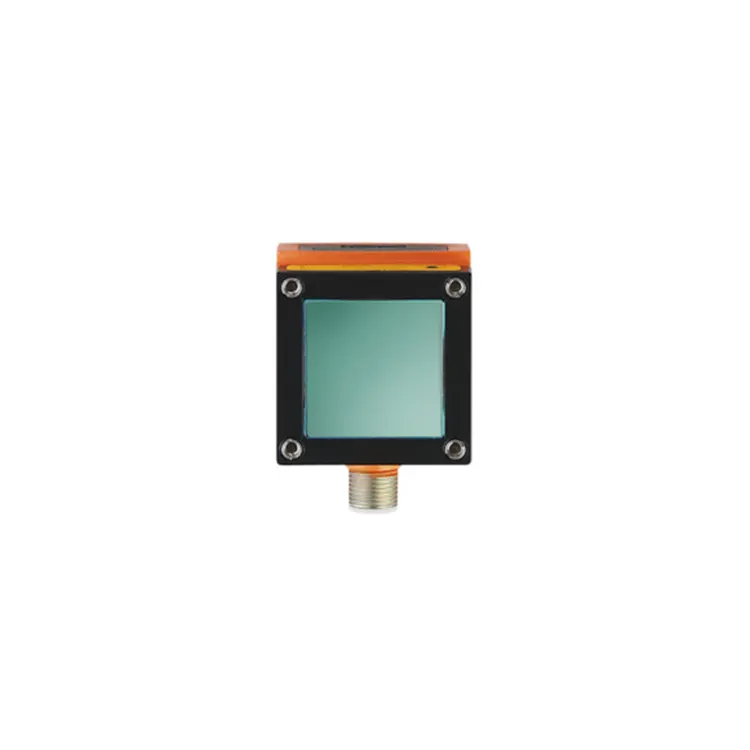
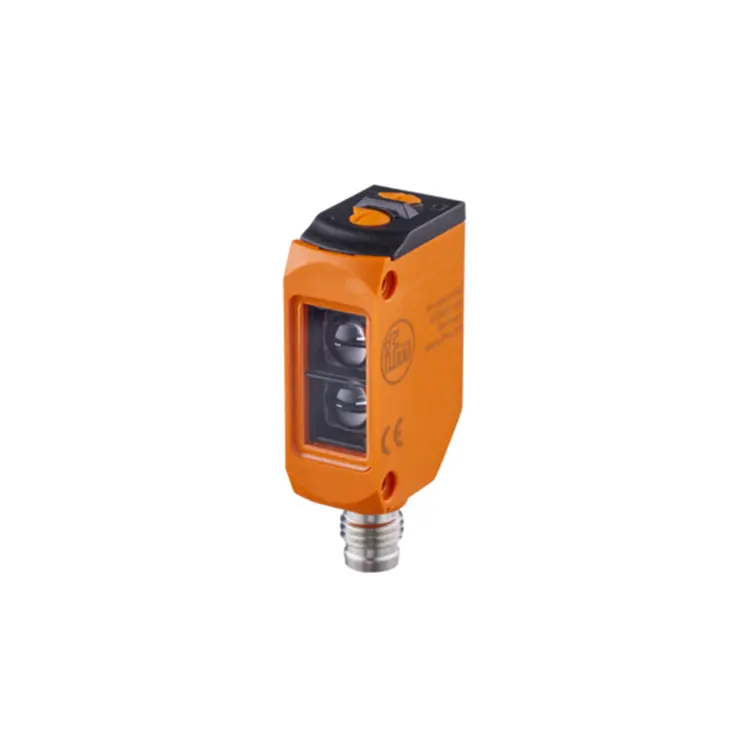
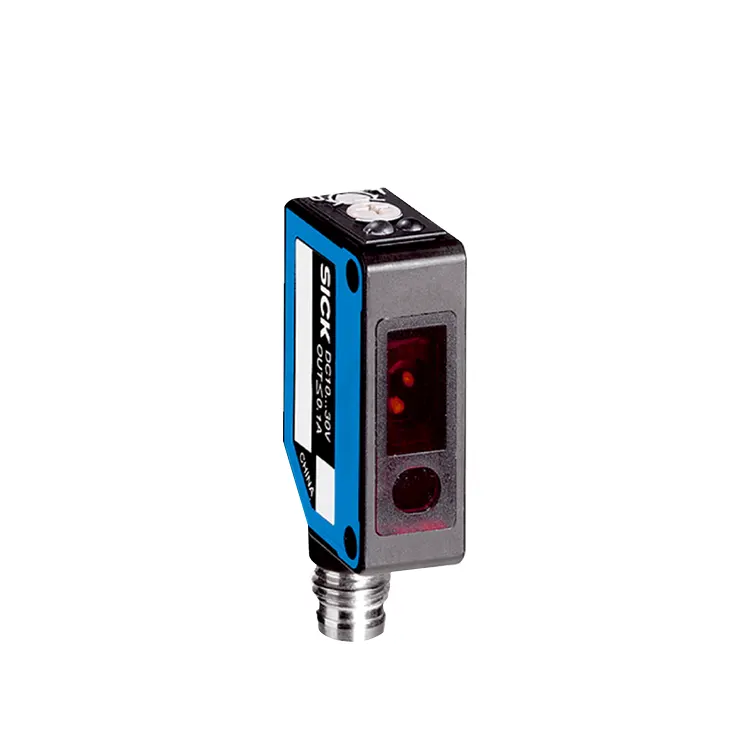
The IFM O1D100 is a photoelectric distance sensor designed for industrial applications that require reliable, non-contact object detection and distance measurement. Manufactured by ifm electronic, it belongs to the O1D family of optical distance sensors and is designed to measure distances of up to 10 meters under specified reference conditions.
Unlike mechanical measurement devices, a photoelectric distance sensor does not need to touch the target object. This makes it useful for monitoring moving products, detecting object positions, and measuring distances where physical contact could interfere with production or damage sensitive materials.
The O1D100 combines a configurable detection range with switching outputs and an analog output option. Its IO-Link interface also supports parameterization and the transfer of sensor data to compatible automation systems.
For manufacturers, system integrators, and maintenance teams, the main benefit is the ability to incorporate distance information into existing control processes without introducing a mechanical measuring mechanism at the detection point.
Buyers can review the IFM O1D100 product page from Floating Light for product information and sourcing inquiries.
When evaluating an industrial sensor, engineers should consider more than its maximum measuring distance. Output configuration, electrical compatibility, environmental protection, communication capabilities, and target surface characteristics all affect real-world performance.
| Parameter | Specification |
|---|---|
| Product type | Photoelectric distance sensor |
| Manufacturer | ifm electronic |
| Model | O1D100 |
| Measuring range | 0.2–10 m under specified reference conditions |
| Operating voltage | 18–30 V DC |
| Electrical output design | DC PNP |
| Digital outputs | 2 configurable switching outputs |
| Analog output options | 4–20 mA or 0–10 V, configurable |
| Communication interface | IO-Link COM2, 38.4 kBaud, revision 1.1 |
| Sampling rate | 1–50 Hz |
| Protection rating | IP67 |
| Ambient operating temperature | -10°C to +60°C |
| Housing dimensions | 59 × 42 × 52 mm |
| Laser protection class | Class 2 |
| Electrical connection | One five-pin M12 A-coded connector |
Note: Specifications are based on the manufacturer's published product information. The stated measuring range depends on target reflectivity and reference conditions. Confirm the current datasheet, wiring diagram, and configuration requirements before installation or procurement.
One important selection consideration is measurement accuracy. A maximum range of 10 meters does not mean that the sensor provides the same accuracy at every distance. Target color, surface reflectivity, ambient light, and operating conditions can influence measurement performance. Engineers should consult the official IFM O1D100 technical specifications when defining acceptable tolerances.
The IFM O1D100 uses optical time-of-flight measurement. In simplified terms, the sensor emits light toward a target and evaluates the returned signal to determine the distance. This allows the device to measure objects without requiring direct contact.
Once a distance value is obtained, the sensor can use its configured output functions to communicate information to a connected controller or automation system.
For example, a packaging line can use distance information to identify whether a product has reached a specified position. A controller can then coordinate a conveyor, actuator, or inspection operation based on the configured detection threshold.
IO-Link adds another layer of functionality. With a compatible master and controller, technicians can access supported process data, adjust parameters, and retrieve diagnostic information. This can simplify commissioning and reduce the need for repeated manual adjustments at the sensor.
The IFM O1D100 is suitable for many factory automation tasks where non-contact distance measurement provides useful information for a control process. Its suitability should always be verified against the required range, target properties, response needs, and installation environment.
On assembly and manufacturing lines, the sensor can monitor the position of workpieces, fixtures, or moving components. Distance thresholds can help a control system determine whether an object is within an expected operating zone before the next process begins.
This approach can support repeatable handling sequences and reduce dependence on mechanical contact switches in suitable applications.
Automated storage systems, conveyors, and pallet-handling equipment often need to detect object positions or estimate the distance between a target and a fixed reference point.
The O1D100 can provide distance information for selected positioning and presence-monitoring tasks. However, applications involving complex pallet loads, multiple targets, or safety-critical collision avoidance require a separate assessment of coverage and system-level safety requirements.
In packaging and parcel-handling systems, distance measurements can help determine whether a package has reached a defined position or whether a target falls within a configured measurement window.
Where package dimensions must be calculated, engineers should assess the complete sensor arrangement and control logic. A single distance reading does not automatically provide a complete three-dimensional measurement of a package.
Industrial machinery may require continuous or periodic monitoring of component positions, material levels, or changing distances. The O1D100's analog output can be useful when a controller needs a distance-related signal rather than only a simple on/off state.
Before using it for level measurement or monitoring irregular surfaces, verify the target material, sensing geometry, environmental conditions, and required measurement tolerance.
Correct integration begins with electrical compatibility and a clear understanding of how the measurement will be used. Even a capable sensor may produce unreliable system results if its output settings or controller configuration are incorrect.
For PLC integration, check the electrical input specifications and scaling logic of the selected controller. Do not assume that every communication protocol listed for other automation products is supported directly by the O1D100. Its documented communication interface is IO-Link; any network-level integration may require a compatible master or gateway.
The best distance sensor is the one that meets the application's actual operating requirements, not necessarily the model with the greatest nominal range. A structured comparison helps buyers avoid selecting a device that is unsuitable for the target material or control system.
| Selection Factor | What to Check | Why It Matters |
|---|---|---|
| Measurement distance | Minimum, normal, and maximum working distances | Ensures the target remains within the usable range. |
| Target surface | Color, reflectivity, texture, and dimensions | Affects the quality and reliability of the returned optical signal. |
| Required accuracy | Permitted measurement error at the actual distance | Prevents a long-range sensor from being used beyond its practical tolerance. |
| Output compatibility | PNP inputs, analog channels, or IO-Link support | Ensures the sensor can communicate with the control system. |
| Operating environment | Temperature, dust, moisture, vibration, and ambient light | Helps determine whether the sensor can operate reliably at the installation point. |
| Response requirements | Sampling rate and machine cycle time | Ensures measurement updates are appropriate for the process speed. |
| Installation space | Housing dimensions, mounting position, and cable access | Supports straightforward mechanical integration and maintenance. |
When comparing the O1D100 with another sensor, review the official specifications of both products under comparable conditions. Differences in measurement principles, reference targets, output functions, and environmental ratings can make headline specifications misleading.
Purchasing teams should also verify the exact model designation, product condition, lead time, warranty terms, and availability of technical documentation before placing an order.
Good installation practices help maintain consistent measurements and minimize unnecessary troubleshooting. Although the IFM O1D100 has an IP67 protection rating, installation conditions and target characteristics still affect practical performance.
For applications involving dust or oil mist, establish a maintenance schedule based on the actual contamination level. An enclosure rating does not guarantee that an optical measurement will remain unaffected by deposits on the sensor's front window.
If measurements fluctuate, check alignment, target reflectivity, ambient light, electrical connections, and configuration settings before replacing the device. When necessary, compare the sensor readings against a known reference measurement under controlled conditions.
The published measuring range is 0.2–10 meters under specified reference conditions using a white target with 90% remission. Actual performance depends on target characteristics and the operating environment.
Yes. The O1D100 supports IO-Link COM2 at 38.4 kBaud and IO-Link revision 1.1. A compatible IO-Link master is required to access the communication functions.
Yes. One of its outputs can be configured for a 4–20 mA current signal or a 0–10 V voltage signal. The analog range should be configured to suit the application's measurement requirements and controller input.
Its IP67 rating provides protection against dust ingress and temporary immersion under specified test conditions. However, heavy contamination on the optical window can affect measurement quality, so environmental suitability and cleaning requirements should be evaluated for each installation.
The specified operating voltage is 18–30 V DC. Always follow the official wiring diagram and confirm the power supply and controller input requirements before connecting the sensor.
Ensure proper alignment, use representative target materials during testing, keep the optical window clean, and configure the sampling rate and output thresholds appropriately. If readings remain unstable, check ambient light, surface reflectivity, electrical interference, and the operating distance.
Industrial buyers can contact Floating Light through its IFM O1D100 product page to request a quotation and confirm current stock, delivery arrangements, product documentation, and applicable warranty terms.
The IFM O1D100 is a practical option for industrial applications that need non-contact distance measurement, configurable switching behavior, analog signal output, and IO-Link communication. Its measuring range of up to 10 meters under specified reference conditions makes it worth evaluating for production-line positioning, material handling, packaging, and selected equipment-monitoring tasks.
The key to successful implementation is matching the sensor's actual measurement performance and interface capabilities to the target material, working distance, machine cycle, and environmental conditions. Careful configuration and commissioning are just as important as choosing the correct model.
Looking for a dependable source for the IFM O1D100? Floating Light can help your purchasing and engineering teams review product details, check availability, and identify suitable industrial automation components for your project. Visit our IFM O1D100 product page or contact us today to discuss your requirements, request a quotation, and obtain the information you need to make a confident purchasing decision.